White Chalky Residue on Your Basement Walls? What It's Actually Telling You
Quick Answer: That white, powdery buildup on your basement walls is almost always efflorescence — mineral salts left behind after water moves through concrete or masonry and evaporates. On its own, it isn't mold and it isn't structural damage; it's a byproduct of moisture passing through the wall. But efflorescence only forms where water has traveled, so its presence tells you moisture is getting into or through your foundation on a regular basis. A light dusting after a wet spring is common in older Maine foundations. Heavy, recurring buildup, a damp wall behind it, or crumbling concrete underneath it means the moisture path needs attention before you frame, insulate, or finish anything over that wall.
You go downstairs to grab something from storage and notice it: a pale, powdery coating creeping across the block wall near the floor, or dusted along a mortar joint like someone spilled flour and never cleaned it up. You wipe a finger across it and it smudges white. It wasn't there last fall. Now it's back, right around the same spot, right after a wet stretch of weather.
That reaction is the right one to have. Basement walls don't grow white crust for no reason. In a lot of southern Maine homes — especially older ones with fieldstone, block, or early-era poured foundations — this is one of the most common things a basement specialist gets called out to look at, and most of the time the residue itself isn't the problem. What's underneath it usually is.
What That White Residue Actually Is
The chalky deposit has a name: efflorescence. It's a mineral crust, mostly calcium carbonate, left behind when water carries dissolved salts out of concrete or masonry and then evaporates at the surface, leaving the salts behind as a solid.
How It Forms
Concrete and mortar contain soluble salts as part of the curing process. When water moves through the material — from the soil side toward the room side — it dissolves some of those salts along the way. Once that water reaches open air and evaporates, the salts crystallize on the surface. What's left behind is the white residue you're seeing.
Why It's Not Mold
Mold has texture, color variation, and often a musty smell, and it grows rather than crystallizes. But efflorescence is flat and dry. It brushes or scrapes off fairly easily, and it won't come back overnight once you've cleaned it, unless moisture is still moving through the wall. If what you're looking at is fuzzy, greenish-black, or spreading in an irregular pattern rather than following mortar joints and low spots, treat it as a separate issue and have it evaluated on its own.
Where It Tends To Show Up
Efflorescence concentrates wherever water finds the shortest, easiest path through the wall assembly — mortar joints in a block foundation, hairline cracks in poured concrete, the cove joint where the wall meets the slab, and porous patch repairs that weren't sealed the same way as the surrounding concrete.
Why It Shows Up on Basement Walls in the First Place
Efflorescence is a symptom, not a cause. The real question is why water is moving through your foundation wall to begin with, and in this part of Maine there are a few recurring answers.
Hydrostatic Pressure From The Soil Side
Foundation walls sit below grade, surrounded by soil that holds water like a sponge. As groundwater rises, it presses against the outside wall. Because concrete and masonry are porous, water can slowly move through them by capillary action, even when no visible structural crack exists.
Spring Snowmelt And A Seasonally High Water Table
Southern Maine winters can build deep snowpack, and rapid melting in March and April saturates soil around foundations faster than drainage can handle. That is when homeowners often notice fresh efflorescence, because moisture levels surrounding the foundation are typically at their seasonal peak each spring.
Grading And Drainage That Send Water Toward The House
Downspouts that discharge near foundations, soil sloping toward the house, and poorly drained window wells can concentrate water beside basement walls. This moisture increases hydrostatic pressure against the foundation, making it easier for water to migrate through porous concrete, masonry, cracks, and joints over time.
Older Fieldstone And Early Block Foundations
Older fieldstone and early block foundations often lack modern exterior waterproofing membranes and have endured decades of Maine freeze-thaw cycles. Wet soil freezes and expands, then thaws repeatedly, gradually widening tiny cracks in mortar and concrete and creating established pathways where water can repeatedly travel.
TIP: Track where and when the residue appears. A wall that develops efflorescence only after heavy rain or the spring thaw, in the same one or two spots, points to a localized drainage issue you can often address at the source — regrading, a downspout extension, or sealing a specific crack — rather than a whole-foundation problem.
Reading What the Residue Is Telling You
Not all efflorescence carries the same weight, and the difference matters most if you're planning to finish the space.
Light, Dry, And Infrequent
A thin dusting appearing once or twice yearly and brushing away easily usually means limited moisture moving through the wall. This is common in older concrete and unwaterproofed Maine basements. Monitor it rather than treating it as an immediate emergency.
Heavy, Recurring, And Building Up Quickly
Heavy residue returning soon after cleaning suggests a consistent moisture pathway, such as cracking, failed repairs, or poor grading. When efflorescence returns within weeks, the underlying water source needs correction rather than repeated cleaning, because moisture continues reaching the wall.
A Damp Or Cool Wall Behind The Residue
If concrete or block feels damp or noticeably cooler than nearby surfaces, moisture is currently present inside the wall. That raises concern because ongoing moisture can eventually damage wood framing, insulation, and drywall installed against the foundation in finished basements.
Powdery Surface With Soft Or Crumbling Concrete
Powdery residue combined with soft or crumbling concrete may indicate spalling, caused by moisture and repeated freeze-thaw cycles damaging the concrete itself. Unlike surface efflorescence, spalling signals deterioration of the wall surface and warrants professional foundation assessment rather than routine cleaning.
WARNING: If efflorescence is paired with a musty smell, visible mold growth, standing water after storms, or concrete that flakes and crumbles when scraped, don't finish over that wall until the underlying moisture source has been identified and addressed. Framing, insulation, and drywall installed over an active moisture problem trap that moisture against organic materials, and that combination is what actually causes basement mold — not the efflorescence itself.
What to Do Before You Finish the Basement
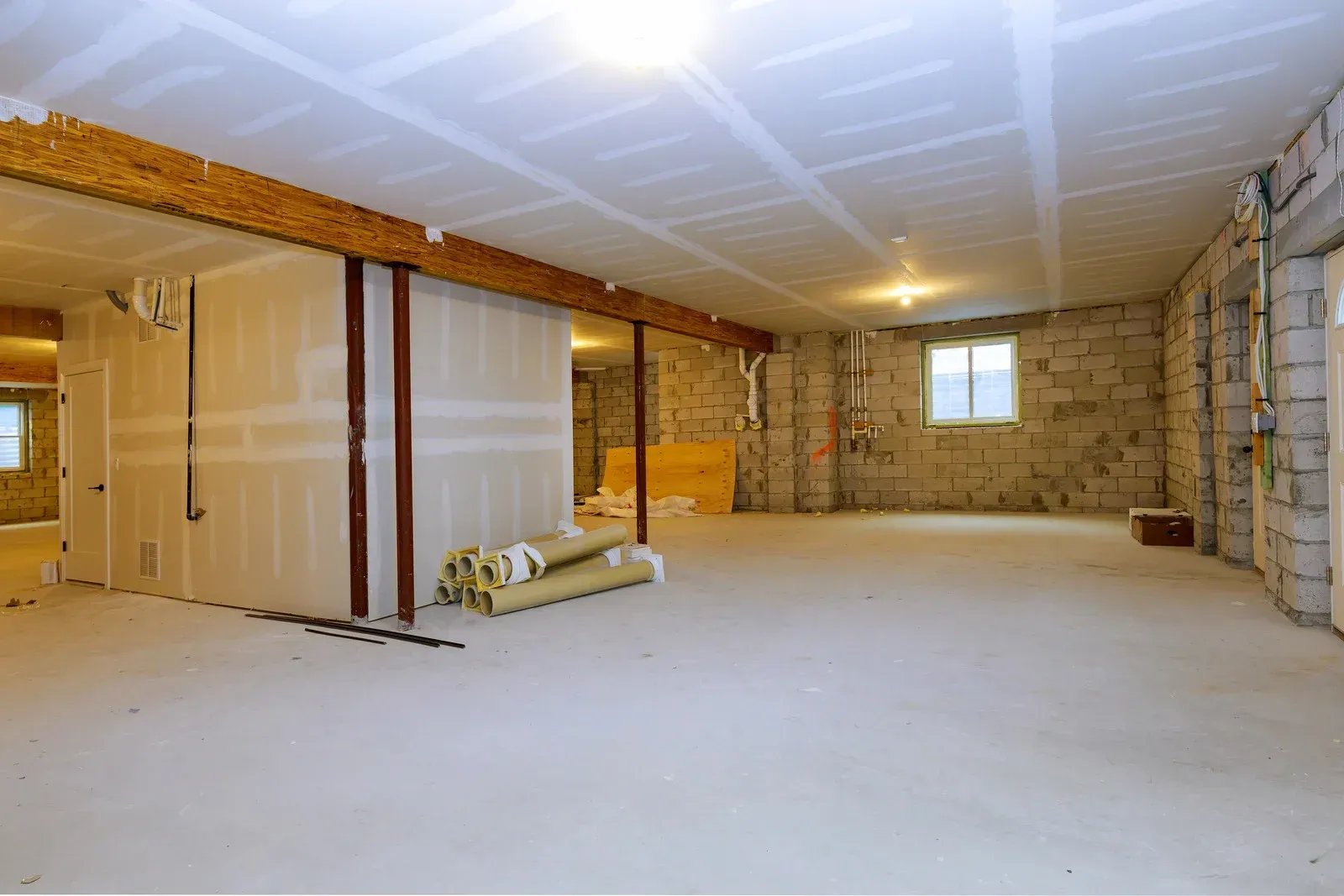
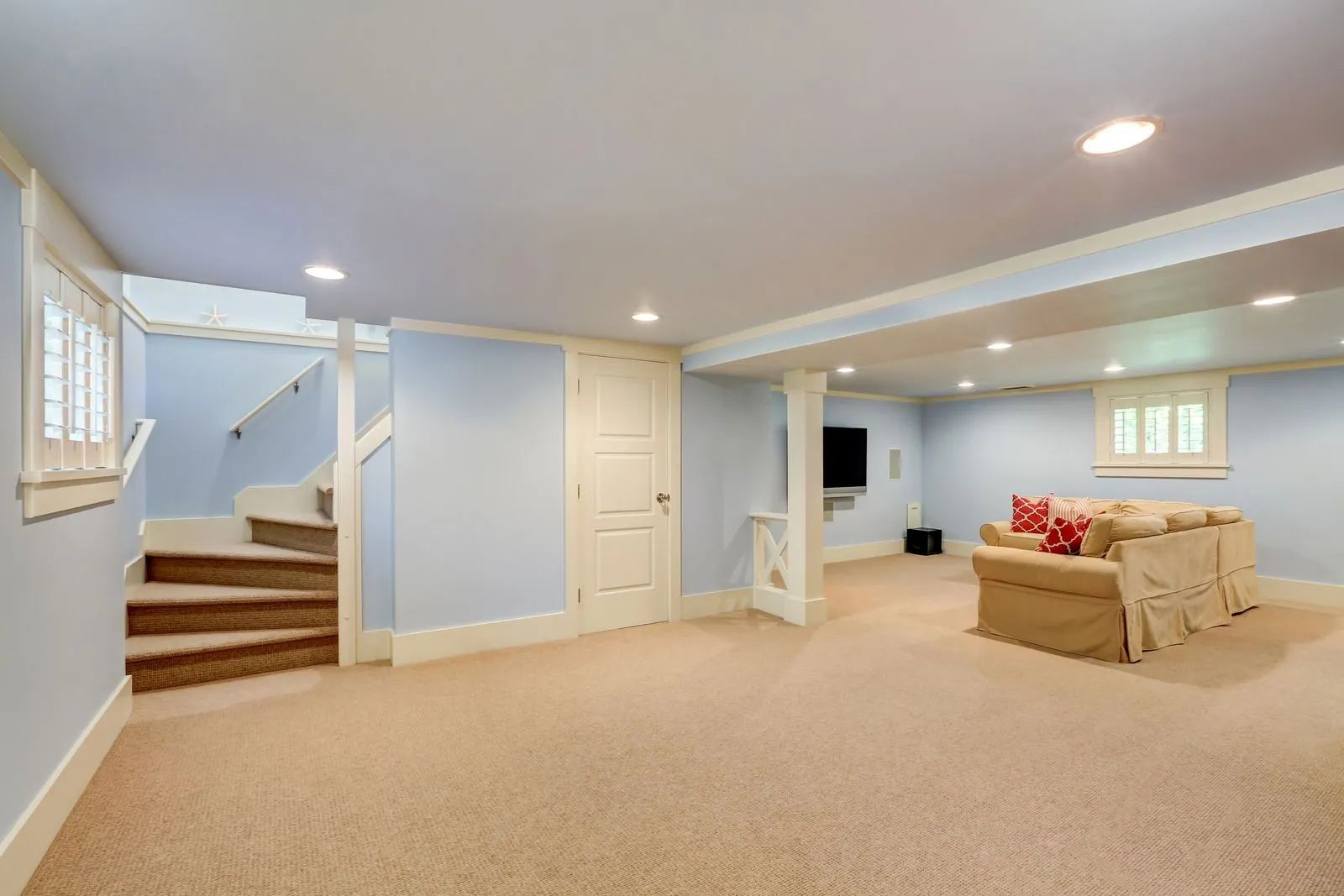
If you're planning to turn the space into a bedroom, family room, or home theater, efflorescence is worth resolving as a step in the process rather than something to paint over.
Clean It And Watch What Comes Back
Use a stiff brush and water, or mild vinegar for stubborn buildup, to remove efflorescence. Mark the cleaning date and check again after several weeks. Quick recurrence suggests active moisture movement, while months without buildup indicates manageable moisture conditions.
Address The Moisture Source Before Finish Work
Fix grading, extend downspouts, and seal active cracks before installing framing, insulation, or flooring. Once finished walls are in place, moisture sources become much harder to access and diagnose. Addressing water problems early keeps future repairs simpler, cleaner, and less disruptive.
Assess The Wall As Part Of The Finishing Plan
A basement specialist should evaluate moisture conditions during the finishing process, identifying entry points, frequency, drainage needs, vapor control, and sealing requirements. This approach differs from framing walls first and discovering moisture problems later, after finishes conceal the foundation.
Choose Materials That Tolerate Below-Grade Conditions
Even after moisture sources are corrected, foundation walls remain more moisture-prone than above-grade surfaces. Vapor barriers, moisture-resistant insulation, and flooring designed for below-grade spaces provide added protection, helping the finished basement better tolerate moisture naturally carried through concrete walls.
Frequently Asked Questions
Does efflorescence mean my basement is leaking?
Not necessarily. Efflorescence means water has moved through the wall, ranging from minor dampness in porous concrete to an active leak. The amount, frequency, and dampness behind the wall determine how serious it really is.
Can I just paint over efflorescence?
Painting over active efflorescence traps moisture behind the film, and trapped water often causes bubbling, peeling, or new salt spots nearby. Address the source first, then use a masonry-rated sealer built for below-grade walls long-term.
Is efflorescence more common in older Maine homes?
Yes. Fieldstone and early foundations built before modern waterproofing tend to be more porous, and decades of freeze-thaw cycling have widened the joints where water enters. Newer foundations with exterior membranes see it less often.
Will efflorescence come back after I clean it?
If the moisture source hasn't changed, yes. Cleaning removes the visible salts but doesn't stop water from moving through the wall, so new efflorescence forms on roughly the same timeline. That pattern is useful information.
How is efflorescence different from mold on basement walls
Efflorescence is a dry, flat, whitish mineral deposit that brushes off and has no smell of its own. Mold has texture and color, often smells musty, and needs organic material and sustained moisture to grow.
Should I get the wall checked before finishing, even if the residue looks minor?
Yes. A wall that looks fine on the surface can still hold more moisture than expected, and once insulation and drywall go up, the concrete loses the airflow that let it dry naturally over time.
What the Residue Is Really Telling You
That white residue on your basement wall isn't the enemy. It's information, a record of where water has been moving and how often. A light dusting after a wet season is often just an older foundation doing what porous concrete does over time. Heavy, recurring buildup, or a wall that feels damp underneath it, is the foundation asking for a closer look before anything gets built over it. Reading that pattern now costs nothing. Ignoring it costs far more later.
Gerrish Remodeling & Design
has spent 15
years finishing basements across Saco and the surrounding Maine towns, and that experience starts with understanding what a wall is doing before covering it. Every foundation carries its own history of moisture, freeze-thaw, and settling, and that history matters more than the paint color or flooring you choose. A basement wall you've actually looked at, tested, and understood becomes a basement you can trust for decades, after the framing and drywall are finished.